

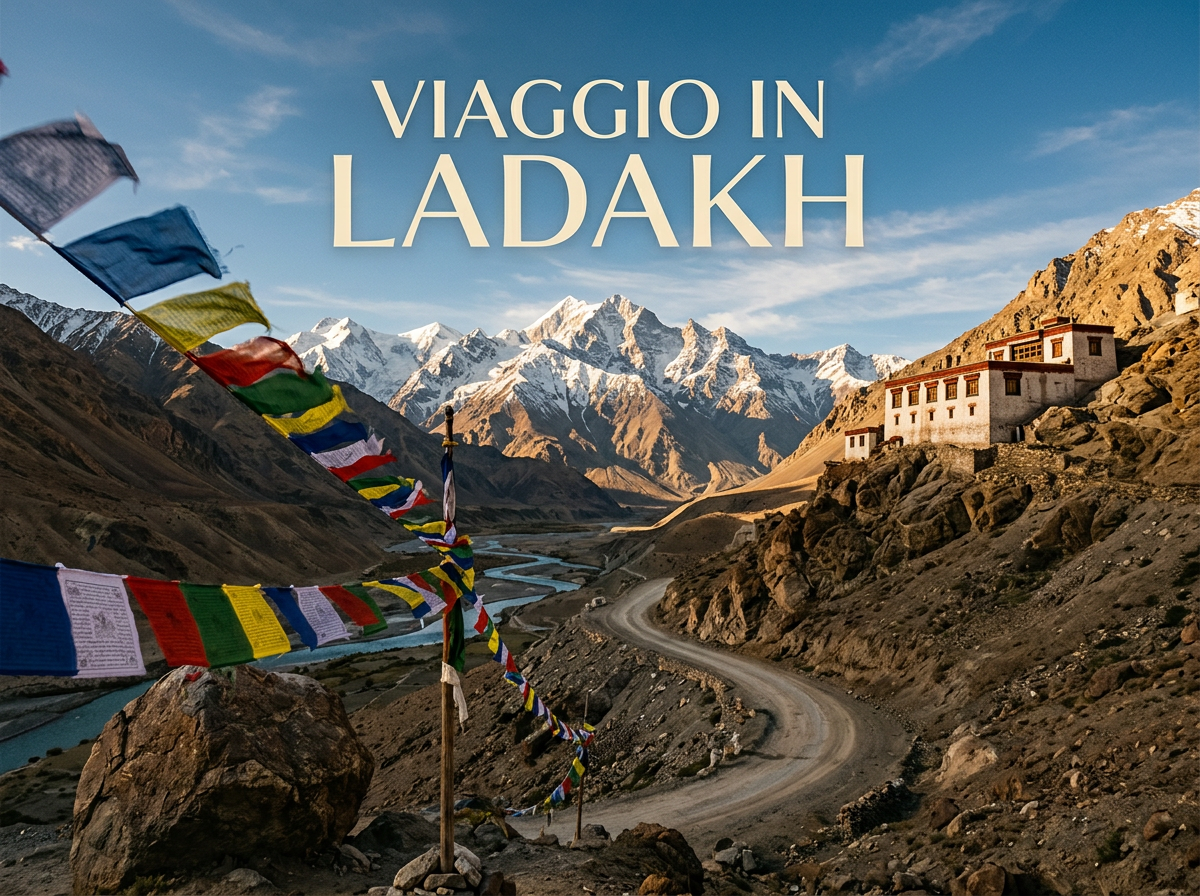
You are in Leh, looking at a map on your phone. Hunder has sand dunes, Diskit has a giant Buddha, Turtuk looks green on the map, and you are trying to work out whether all three fit into one day. They do not. That is usually the first useful lesson about the Nubra Valley: it is bigger, slower and more varied than most itineraries suggest.
A Trip to Ladakh (Viaggio in Ladakh) feels incomplete without this valley. You cross high mountain roads from Leh, then arrive in a wide river valley where cold desert meets poplar trees, barley fields and the Shyok River. The dunes near Hunder are real, and the double-humped Bactrian camels grazing nearby are descendants of animals once used on old trade routes.
Why the valley feels different
Nubra is not one village with one viewpoint. It is a collection of places with very different characters. Diskit is the main town and home to the dramatically positioned Diskit Monastery, while Hunder lies close to the famous sand dunes. Further along the Shyok River, Turtuk has a Balti culture, stone houses and orchards that feel surprisingly green after the dry climb from Leh.
This variety is why I always tell travellers to slow down. If you arrive in the afternoon, see the dunes, ride a camel and leave the next morning, you will see Nubra. But you will not really feel it. The valley rewards people who stay for an evening walk, a local dinner and a quiet morning before the tourist vehicles arrive.
The light also changes everything. At midday, the dunes can look bright and harsh. In the late afternoon, the sand turns gold, the shadows lengthen, and the mountains behind Hunder become almost purple. That is when the photographs start to look like the ones that made you want to come here.
Hunder, dunes and Bactrian camels
The dunes between Diskit and Hunder stretch for about seven kilometres, with seabuckthorn bushes and small patches of greenery around them. This is where you will meet the Bactrian camels, easily recognised by their two humps.
A short camel ride usually costs around €10 to €15, depending on the operator and the route. Go late in the afternoon if you can. The animals are calmer, the heat is gentler, and the light is much better for photos.
Read More: Rome and Venice Are Destinations – Not Simple Cruise-Port Days
One small but useful detail: wear closed shoes, not sandals. The sand looks soft from the road, but it becomes hot in the sun and gets everywhere. I once watched a traveller spend the whole ride trying to shake fine sand out of a pair of canvas shoes. A pair of socks and proper shoes would have saved the moment.
You do not have to ride a camel to enjoy Hunder. Walking along the edge of the dunes, listening to the wind and watching the camels move against the mountains can be just as special. If you do ride, choose a responsible operator and keep the experience short; the animals are working animals, not theme-park props.
Diskit Monastery and the big Buddha
Diskit Monastery sits above the valley and has watched over the Shyok River for centuries. The large Maitreya Buddha statue below it is impossible to miss, facing across the valley towards the mountains.
Visit in the morning if possible. The monastery is quieter, the air is clearer, and you can look down at the valley before the day gets busy. Walk slowly around the prayer wheels, sit for a few minutes in the courtyard, and let the place be more than a photo stop.
From the monastery terrace, you understand the geography of Nubra. The river, the villages, the desert patches and the green fields all fit together in a way that is hard to grasp from the road. It is one of those views that makes you stop talking for a while.
A Viaggio in Ladakh at the right pace
A good trip to Ladakh (Viaggio in Ladakh) usually gives Nubra at least one overnight stay, ideally in Hunder or Diskit. The drive from Leh over Khardung La takes roughly four to five hours with stops, so arriving late and leaving early turns the valley into a rushed checklist.
Stay one night if your schedule is tight. Stay two if you want to include Turtuk without hurrying. The extra night gives you time for a slow breakfast, a walk through the village lanes and a proper conversation with the people who live here.
If you are planning a motorcycle trip to Ladakh (Viaggio in Ladakh moto), Nubra is a memorable stage, but it is not the place to test your stamina. The roads are remote, the weather can change quickly, and fuel planning matters. Ride early, keep your tank topped up whenever you can, and let the day finish in Hunder rather than pushing on after dark.
Turtuk: the quiet surprise
Many visitors reach Hunder, take the camel photos and turn back. That is understandable, but Turtuk is often the part people remember most. The village lies near the Line of Control and was opened to tourism relatively recently. Its Balti heritage, apricot orchards and stone pathways give it a different atmosphere from Diskit and Hunder.
Walk through the village with a local guide if you can. You will see water channels, walnut trees, traditional houses and small fields tucked between rocky slopes. It feels less like a tourist site and more like a living community.
Keep your visit respectful. Ask before photographing people, dress modestly, and buy fruit, dried apricots or handicrafts directly from local families when possible. These small choices matter more here than in a busy town.
Permits and the detail that saves time
Foreign travellers need a Protected Area Permit to visit Nubra, while Indian nationals need the relevant Inner Line Permit or Environment Fee documentation, depending on current rules. The permit should clearly include Nubra Valley, and if you plan to visit Turtuk, make sure that area is added as well.
Here is the operational detail most articles leave out: carry several printed copies, and keep one copy with your driver. Checkposts on the route may ask for documents at different points, and phone signal is not dependable once you leave Leh. I keep one copy in my daypack, one in the vehicle folder and one spare in my luggage. It sounds excessive until a checkpoint asks for it and everyone else is scrolling through a weak signal.
Apply before you leave Leh, not on the morning of departure. The online process is straightforward, but a missing Turtuk endorsement or an unreadable printout can cost you precious daylight.
Food, water and small comforts
Nubra is colder than it looks, especially after sunset. Even in the warmer months, evenings near Hunder can feel sharp once the sun disappears behind the mountains. Bring a proper fleece or light down jacket, even if the afternoon felt warm.
Food is simple and often good: momos, thukpa, dal, rice, local bread and vegetables from nearby fields. Drink bottled or filtered water, and avoid ice unless you know where it came from. I learned this the hard way after accepting a glass of water with ice at a small roadside stall; the next day was spent moving slowly between Hunder and Diskit. Since then, I ask for hot tea or sealed bottled water.
Carry basic medicines, lip balm and moisturiser. The dry air, strong sun and cold wind can be tough on skin and lips. A small packet of tissues, a power bank and a reusable water bottle will earn their space in your bag.
Combining Nubra with Pangong
Many travellers ask whether to visit Pangong Tso after Nubra. The answer depends on time, but the two places complement each other beautifully. A pangong Tso tour (Tour Pangong Tso) can follow Nubra through the Shyok route, taking you from desert dunes to one of the most striking high-altitude lakes in the region.
Read More: Dubai New Year 2026 Celebration Ideas: Start Your Year with Style & Adventure
Do not try to squeeze both into a single day. The roads are long, the checkpoints take time, and the landscapes deserve attention. A relaxed sequence, with nights in Nubra and then near Pangong, gives you a far better experience than a marathon drive.
Questions Italian travellers often ask
Can you see the Hunder sand dunes and ride a Bactrian camel in one afternoon?
Yes. The dunes lie between Diskit and Hunder, and camel rides are usually offered in the late afternoon. Plan to arrive with enough daylight to walk, ride and watch the sunset without rushing.
Do Italian travellers need a permit for Nubra Valley?
Yes. Foreign nationals need a Protected Area Permit, and it should include Turtuk if that village is part of your route. Carry printed copies, because checkpoints such as those near Khardung La and Khalsar may ask for them.
Is Turtuk worth adding to a Nubra itinerary?
If you have an extra night, yes. Turtuk offers Balti culture, apricot orchards and a village atmosphere that feels very different from Hunder. Make sure your permit includes it before setting out.
Can Nubra Valley be combined with Pangong Tso?
Yes, and it is a popular route. Allow separate nights for each area rather than driving the whole circuit in one day, because the Shyok route is long and conditions can change quickly.
A valley worth slowing down for
Nubra Valley is not only about dunes and camels. It is about the moment the desert meets the river, the sound of prayer wheels at Diskit, and the unexpected green calm of Turtuk. Give it time, carry your documents properly, and let the valley unfold at its own pace.
If you are planning a trip to Ladakh (Viaggio in Ladakh) and want help choosing between Hunder, Turtuk and Pangong, send a message to Ciao India Tours. Tell us how many days you have and what you would like to experience; we can help you shape a route that feels personal, practical and unforgettable.